There is an old Chinese saying that where you eat matters more than almost anything else — and the answer, for centuries, has always been Guangzhou. We went to see if the city still earns it. It does, course after course.
食在广州,穿在苏州,玩在杭州,死在柳州。 Shí zài Guǎngzhōu — “Eat in Guangzhou”. The full saying pairs four cities with the four pleasures of life: eat in Guangzhou, dress in Suzhou, have fun in Hangzhou, and — because its coffins were famously well made — rest in Liuzhou. Eating comes first, and Guangzhou comes first for eating. It is not boasting. It is geography and history. A great port on the Pearl River, rich farmland behind it, the sea in front of it, and generations of chefs who treat freshness as a religion. Cantonese cooking was refined here, then carried by Guangzhou cooks to Hong Kong, Singapore, and Chinatowns around the world. Guangzhou does not do food as fuel. It does it as a daily ritual, from the first pot of tea in the morning to the last skewer at night.
Chapter 01 Morning starts with yum cha — 饮茶
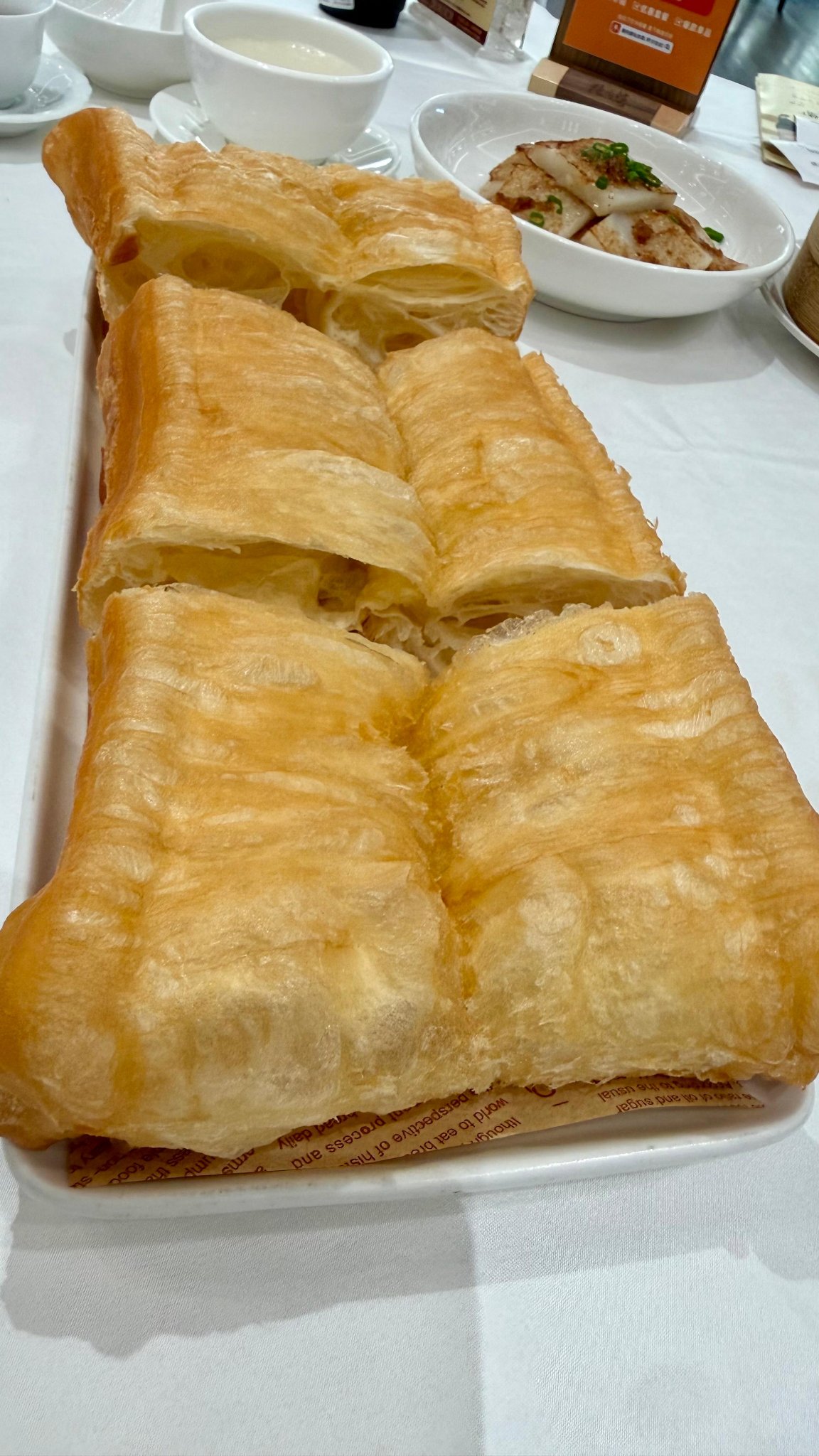
Yum cha — literally “drink tea” — is the city’s morning ceremony: small dishes, shared between sips, ordered in rounds so nothing goes cold. The first was a youtiao the size of a forearm — a golden fried dough stick, shatteringly crisp outside, airy and layered inside, made to be torn and dunked into congee or warm soy milk. Beside it, neat slices of pan-fried turnip cake, crisped at the edges.
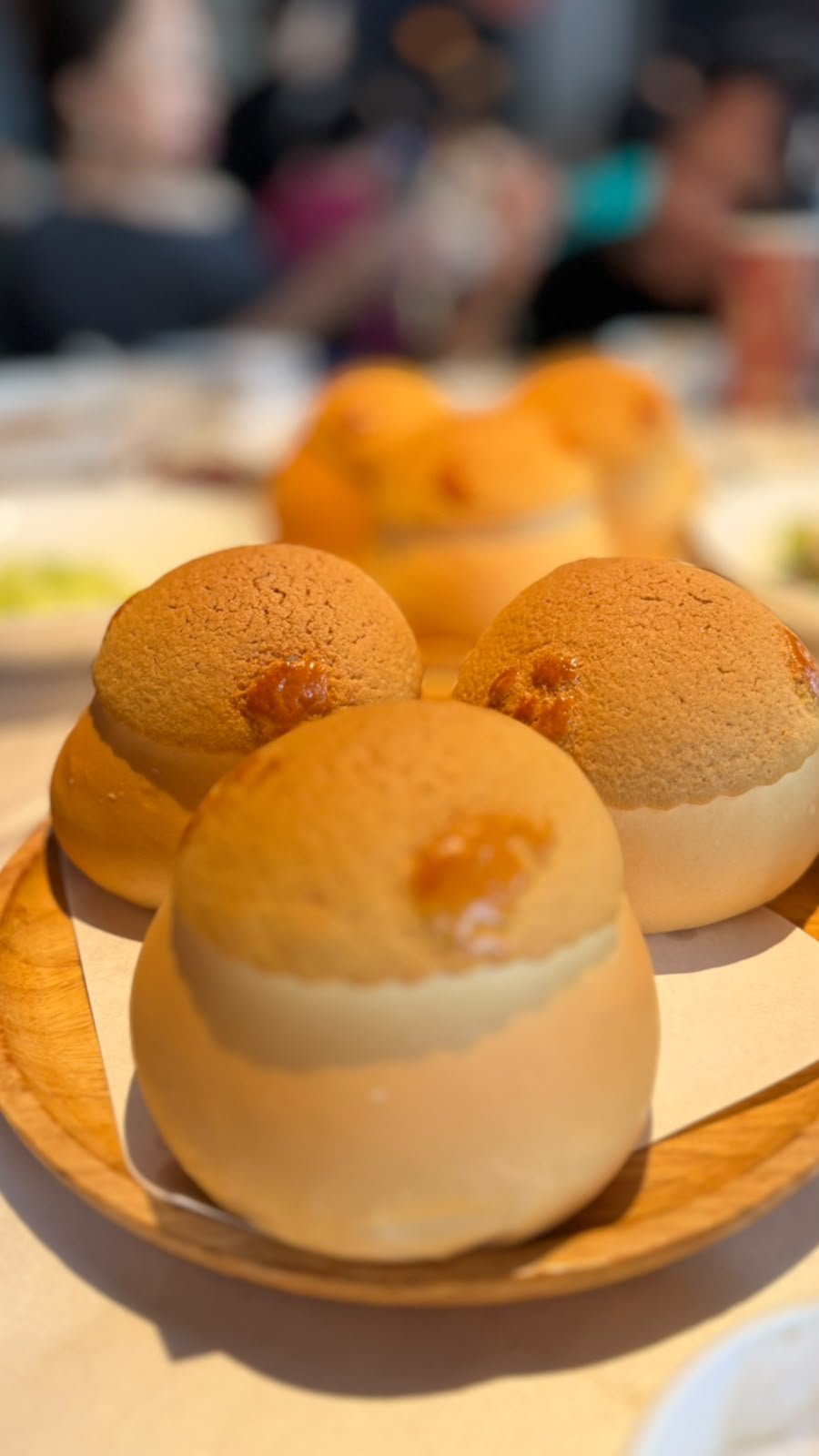
The second was the bun everyone fights over: the crispy baked Pineapple Buns (Bo Luo Bao 菠蘿包). A soft, pillowy bun under a crackly, sweet cookie crust. Bolo Bun has a sugary top crust, fluffy dough and buttery crust. A favorite bake from Hong Kong but just better in GuangZhou.
Chapter 02 The wonton test — 云吞
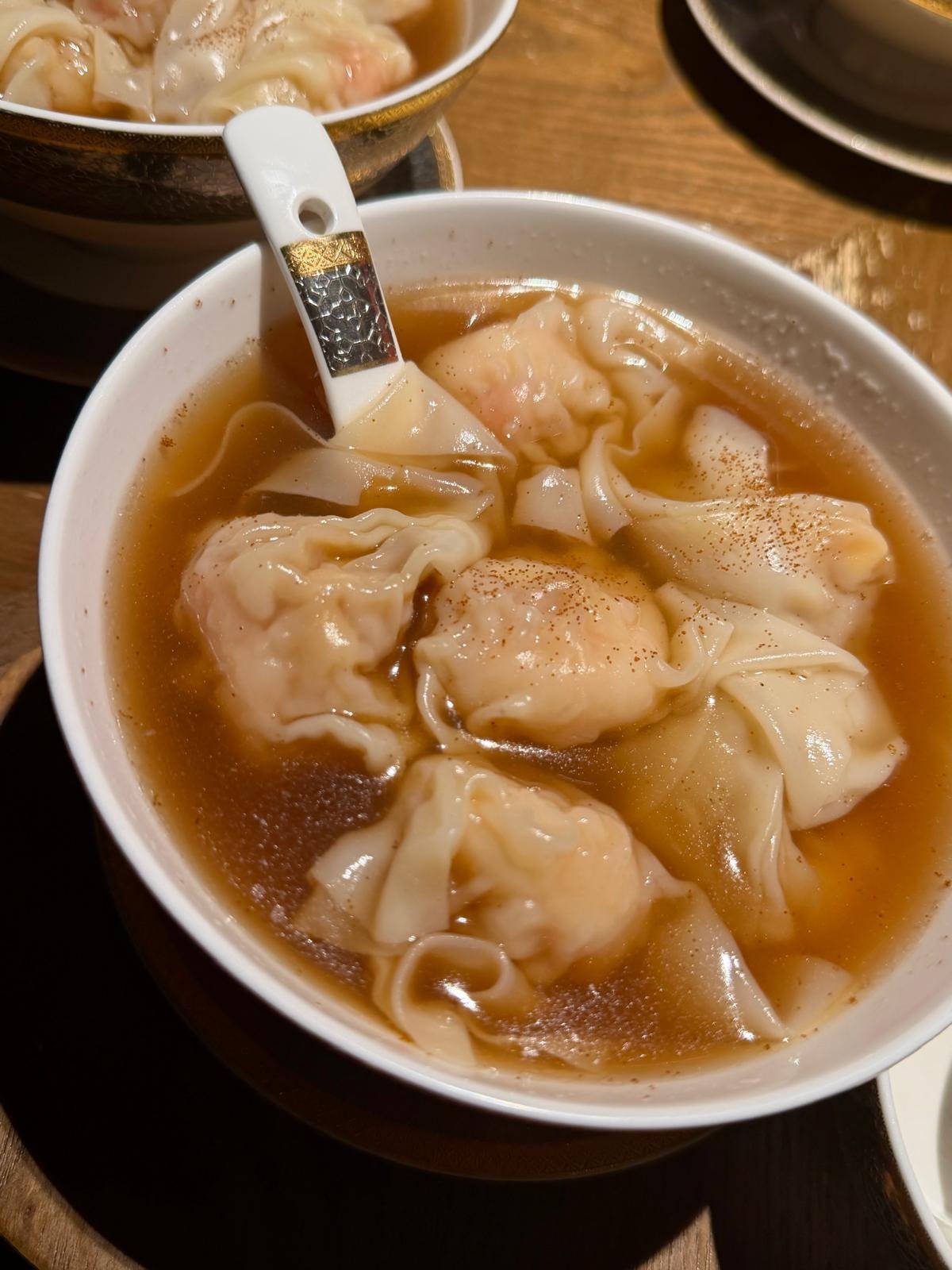
If yum cha is the ceremony, the wonton is the exam. Guangzhou’s shrimp wontons are small on purpose — one mouthful each, the skin so thin and silky it is nicked for swallowing clouds, wrapped around a whole, snappy prawn with just a little pork for richness. The broth should be clear, golden and quietly deep.
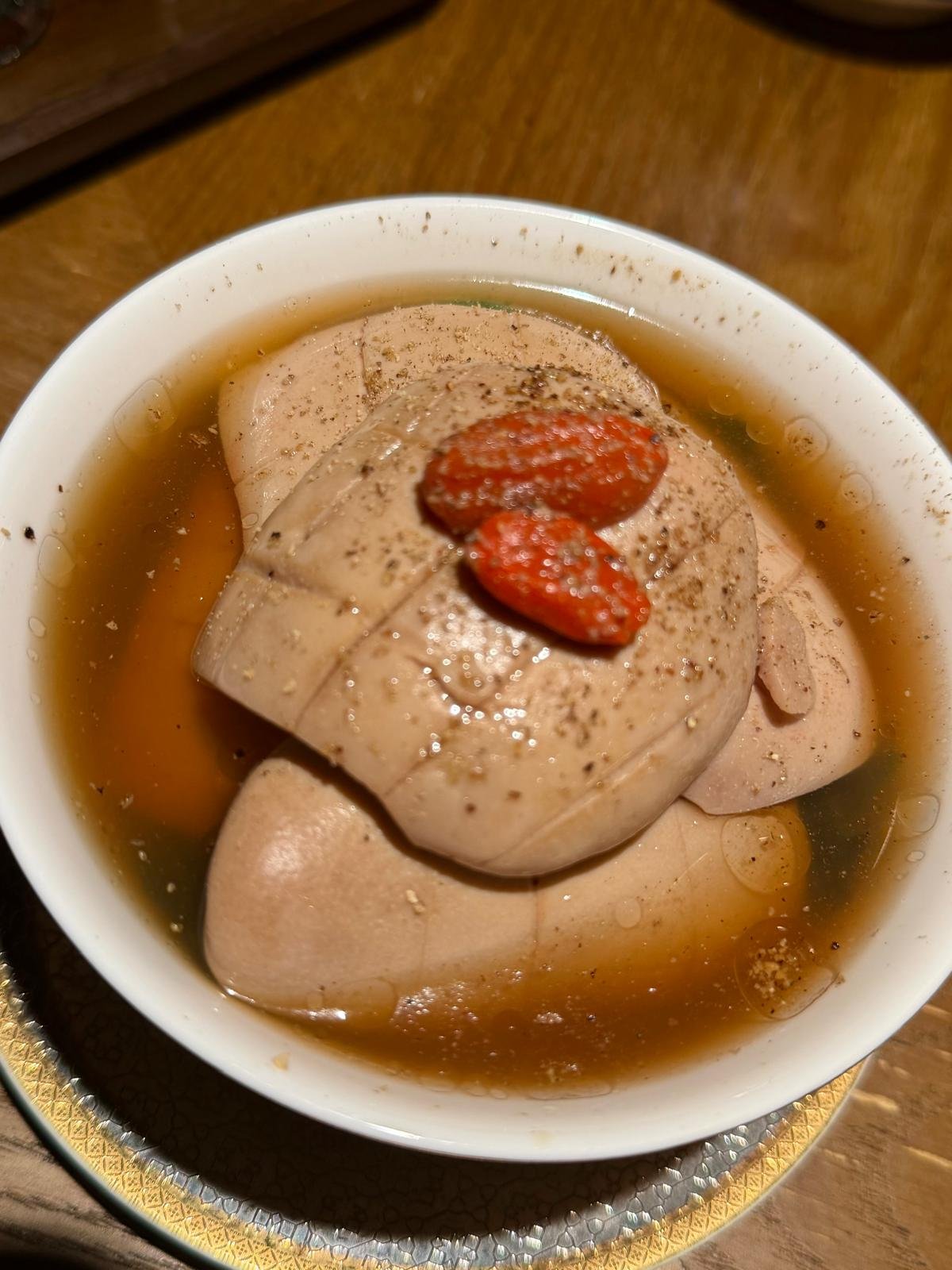
The table also held sliced pork liver, gently poached in a clear, peppery broth with goji berries on top — silky, clean-tasting, and cooked for seconds, not minutes.
In Guangzhou, freshness is not a feature. It is the whole point — 不鲜不食, if it isn’t fresh, don’t eat it.
Chapter 03 Siu mei: the roast masters — 烧味
Walk any old Guangzhou street and you will pass a siu mei shop: whole ducks and geese hanging in the window, skin lacquered to a deep mahogany shine. The roast is marinated, air-dried, then roasted until the skin turns crisp and glassy while the meat underneath stays juicy.
Roast goose is the connoisseur’s pick — richer and more deeply flavoured than duck, its skin shattering over meat that almost pours with juice.
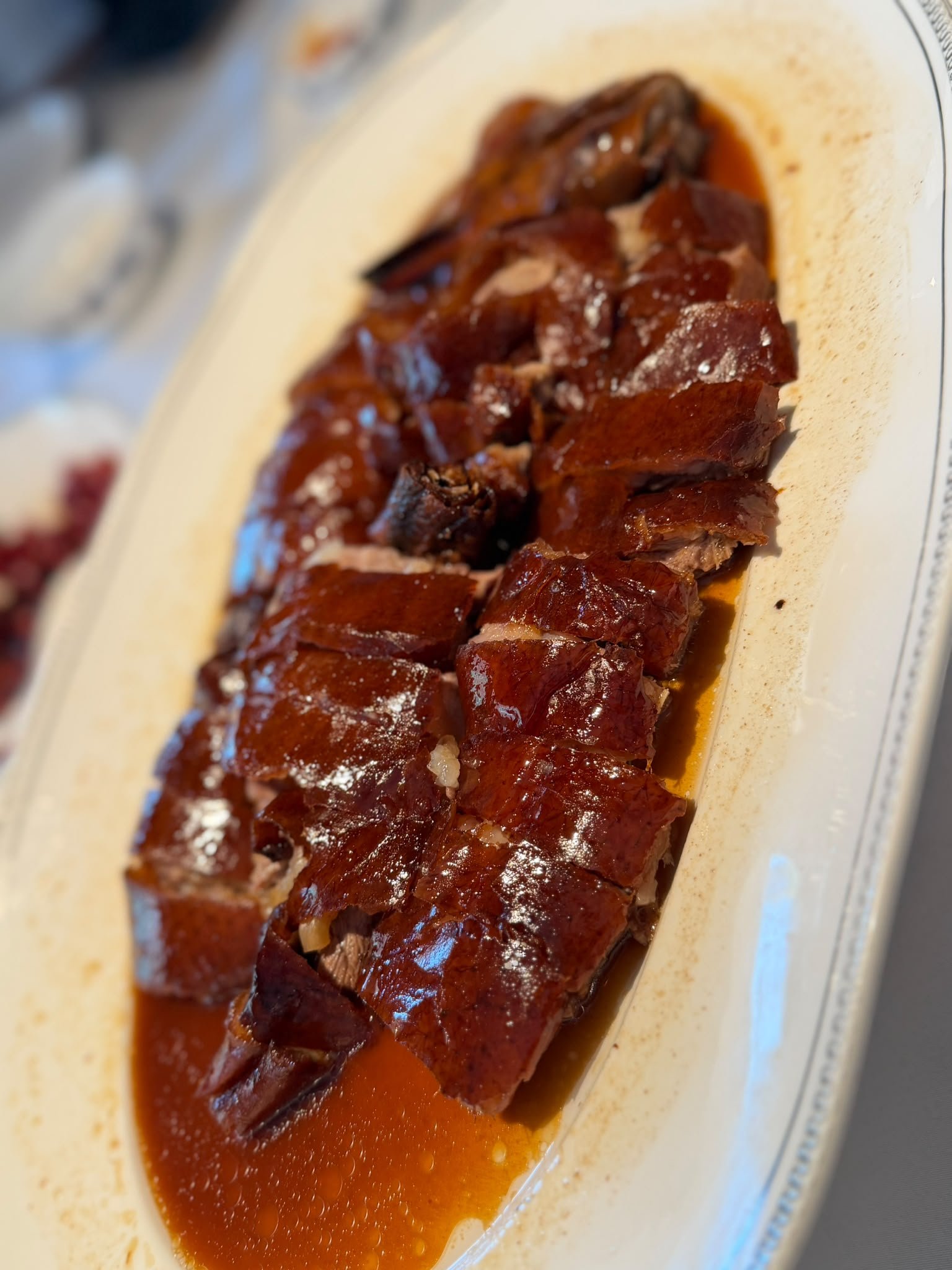
Roast duck is its close, beloved rival, a little leaner, just as glossy.
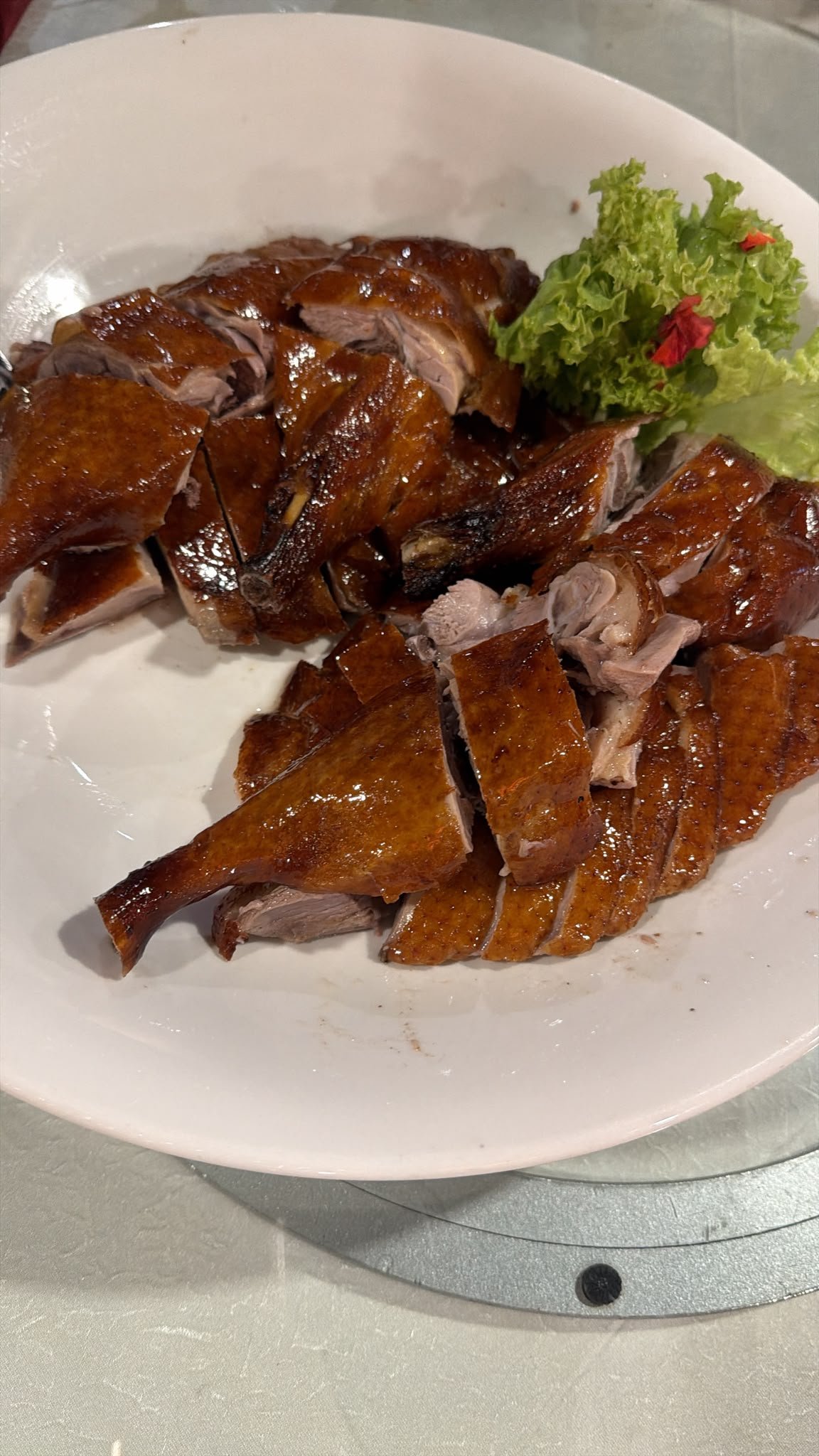
Chapter 04 From the Pearl River & the sea — 海鲜
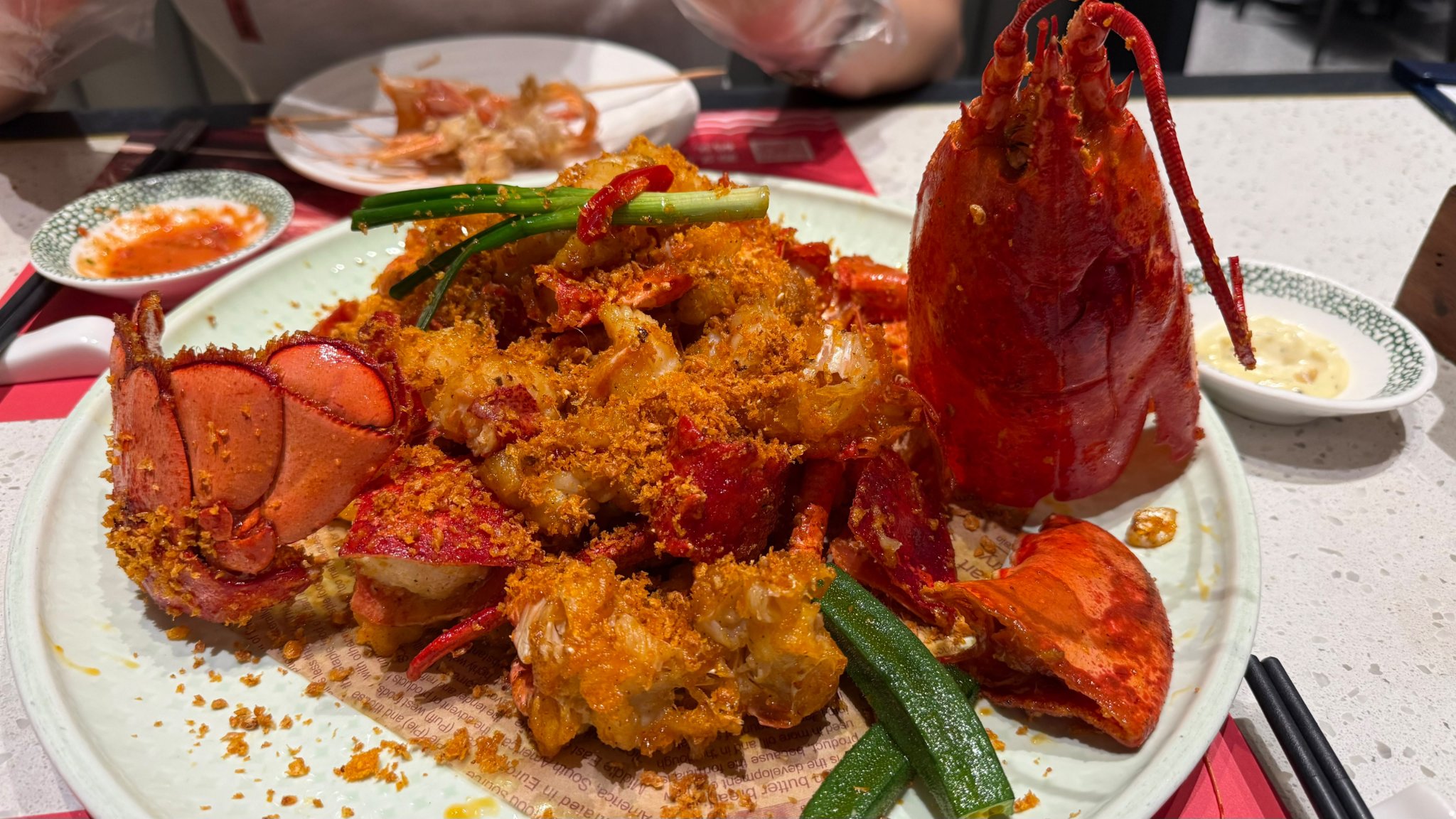
For the showpiece of the trip, the kitchen sent out a whole lobster in typhoon shelter style — 避风塘 — buried under a mountain of golden fried garlic, chilli and crumbs, the head and tail propped up like a ship’s prow. You eat it with your hands, gloves on, picking sweet, firm meat from the shell.
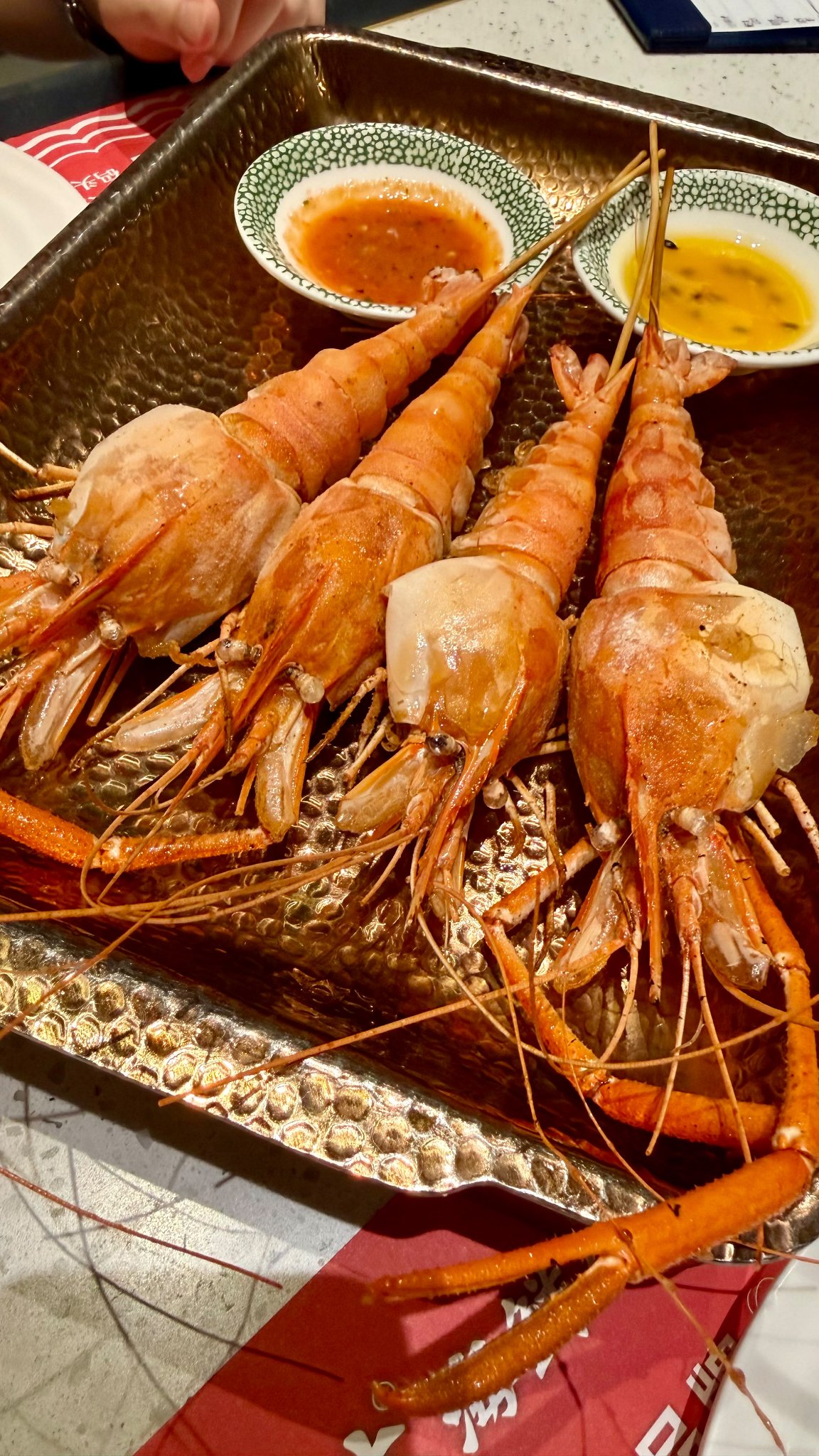
Then came its river cousins: giant river prawns, grilled on skewers until the shells blistered, served on a hammered metal tray with two dips — one chilli-hot, one bright and fruity.
Chapter 05 And at night, the grill — 烤肉
The city’s appetite does not clock off at dinner. Our last stop was a Cantonese grill house — the plates stamped Chan Wong Choi (陈旺财), a name that promises prosperity — where the table fills up before the grill is even hot: metal trays of garlic, spring onion, fresh chilli and house sauces, all waiting for the meat. The star was plate after plate of fresh sliced beef, marbled, glossy with marinade, scattered with sesame and spring onion — the signature smoked beef. Seconds on the hot grill, a dip, and it is gone.
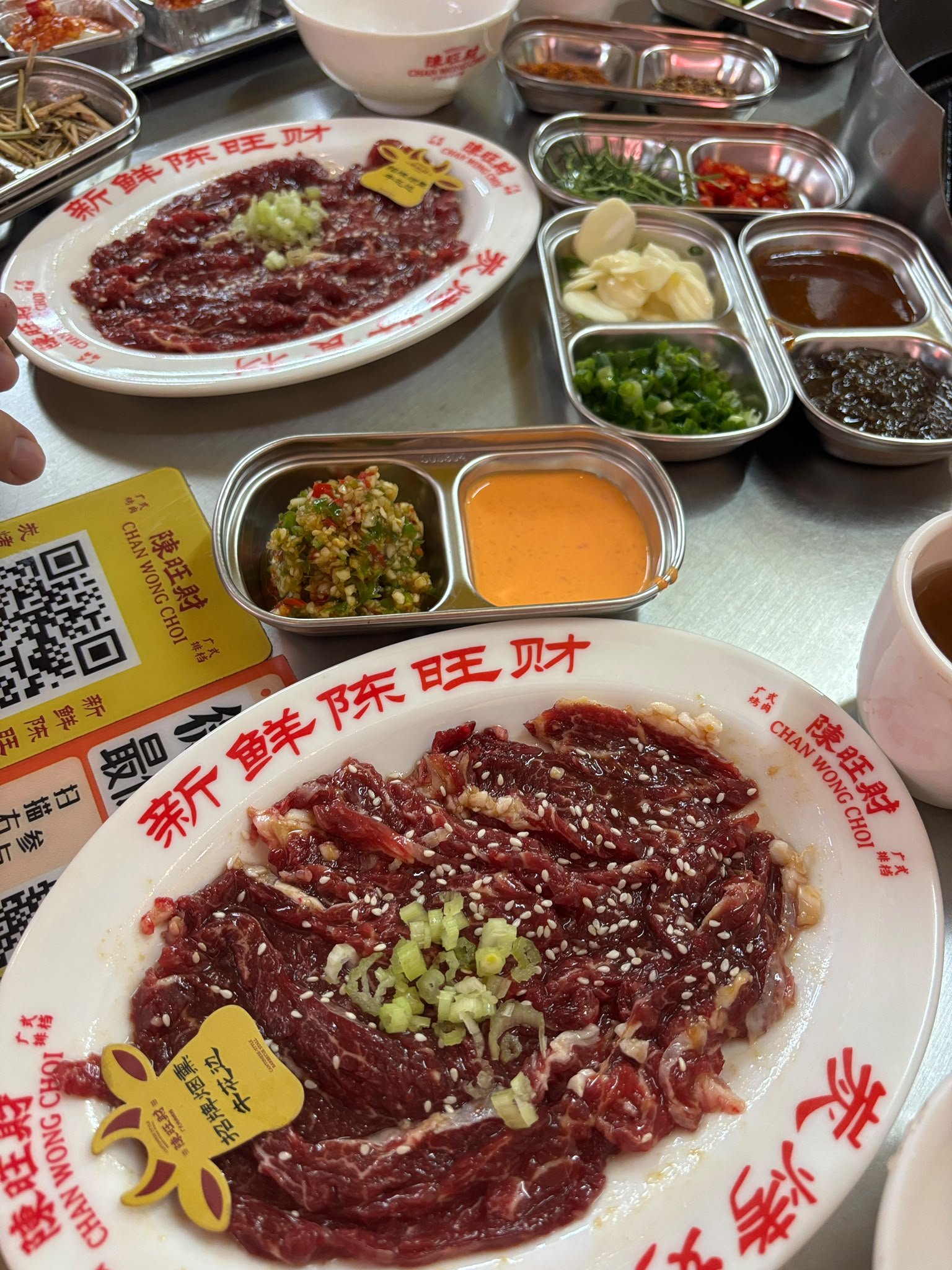
So, does Guangzhou still deserve the saying? On this evidence — a dough stick, a bun, a bowl of wontons, two roasts, a lobster, four prawns and a grill full of beef — it is not even close. 食在广州 is not a slogan the city prints on banners. It is just what happens, three meals a day, to anyone who sits down. If you go, go hungry, go with friends, and order the thing on the next table that you cannot name. That, more than any list, is how Guangzhou has always been eaten.
— Shameless Singapore. Good fun, good food, good travel — a community story from Guangzhou, where eating well is a way of life. 食在广州。
Leave a Reply